

How to Maintain Espresso Machines
Espresso drinks are beneficial to businesses such as hair salons, doctors' offices, and car dealerships. These delicious drinks can improve the patience of your customers while they wait in line for services and enhance the atmosphere inside your establishment.
A Good Housekeeping 2022 Espresso Machine winner, this machine uses a smart dosing system to weigh and dispense the ideal amount of ground coffee per shot. It also has a milk froth that performed well in our tests.
The Basics
Espresso machines are a wonderful addition for any office or home. They are able to make many different drinks including cappuccinos and lattes. They function by pushing hot coffee through the ground with high pressure. This results in a concentrated shot that is bursting with flavor. It contains a high amount of caffeine, which can be an effective stimulant.
These machines are available in a wide variety of sizes, ranging from compact models for home use to larger ones for commercial purposes. They are available in semi-automatic and manual versions. Semi-automatic models have an inbuilt pump that controls the water's flow and pressure. Manual machines require you to regulate this manually. Certain semi-automatic machines come with grinders, while others do not. The kind of machine you pick will depend on your personal preference and budget.
The manual espresso machine operates by turning a handle, which pushes water through the grounds inside a filter basket. This kind of machine is usually referred to as caffettiera or macchinetta, and it is the most common form of espresso maker. It features an inner chamber that holds the water and top chamber with an iron filter. When it is heated the steam from the water is pushed through the grounds and into the top chamber, from where the brewed espresso is ready to serve.
Varieties
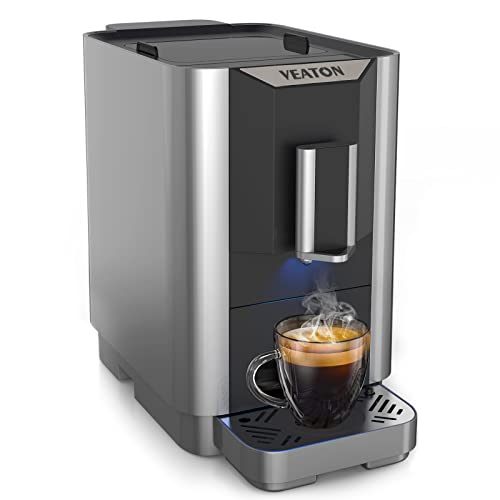
There are various types of espresso machines that are available based on your needs. There are manual, semi-automatic, and fully automatic espresso machines. Each has a unique method of making an espresso shot and a range of other beverages such as cappuccinos or lattes.
The first machines weren't fully automated. They required the user to operate the lever to generate the pressure necessary to pull the shot. They are still in use but are less widespread due to the work required and the strain they could cause. Modern espresso machines create pressure through a variety of mechanisms that include push, screw and see-saw designs. This allows users to control the pre-infusion process, water volume and pressure more precisely than with lever machines.
A pump-driven espresso machine is similar to the stovetop moka kettle, however, it uses an electric pump instead of steam to press the grounds. They have a boiler which warms the water until it reaches a boiling point, and then a pump presses it through a group head into the coffee. These are the most popular kind of espresso machines and are generally less expensive than other varieties.
Semi-automatic espresso machine combine the best aspects of both pump-driven and manual espresso machines. They let you grind the beans and then tamp them, but motors control the pressure to ensure consistency. Some have a separate chamber for heating and freezing milk.
Functions
Commercial espresso machines can make a broad range of coffees, which includes espressos, at the touch of one button. They use pre-packaged pods which are precisely dosed and packaged to produce one cup of espresso or coffee. These machines are popular in offices with lots of traffic because they do away with the necessity for a grinding device or dosing machine, as well as tamping. Since they lack steam functions, a separate milk froth is required to make cappuccinos and lattes.
Many cafes in Europe employed steam machines to increase production and speed up brewing. The early machines were heated on an open flame which led to inconsistent temperature and pressure. Inventor Angelo Moriondo of Turin, Italy is believed to have invented the first machine that was capable of brewing espresso without steam.
The most common type today is the pump-driven espresso machine. They have a porta-filter into which ground espresso beans are inserted. When Coffeee is set to the espresso position the water is pumped at 15 atmospheres of pressure from the heating vessel. After the brew process is complete, the portafilter is removed and the portafilter is emptied for cleaning.
Automatic espresso machines add automation to semi-automatic systems by controlling the extraction time based on internal or volumetric timers. They also take away the barista's ability to tamp and grind coffee, which can affect the quality of the finished product.
Maintenance
Espresso machines might not be the most glamorous equipment in a café, but they are vital. How an espresso machine is maintained will influence the taste of your drinks so it's important to keep up with a routine that includes a daily cleaning decaling, regular cleaning, and regular water filter changes.
Clean espresso machines ensure that the taste of your coffee won't be affected and your clients will have a wonderful experience. A regular schedule of cleanings and maintenance can also increase the life span of your espresso machine so it lasts for years.
Use a damp cloth to clean the baskets and portafilters each shift to get rid of any residue or oil. Backflush the gasket between the portafilter head as well as the grouphead by inserting the nylon brush and moving it around to remove any buildup. Rinse out the gasket and then repeat the process until the water is clear.
Once a week or as needed, mix espresso machine cleaner into the container of water according to the manufacturer's instructions. Then soak the portafilters grates, and baskets for a night in the cleaning solution. If your espresso maker comes with a steam wand and screen, take them out of the entire group with the screwdriver. In separate soaking, soak them in the cleaning solution.